


Polandball Go
4.8117.00 Reviews
App Specs
- Version
- 4.1.3
- Updated On
- License
- Free
- Downloads
- 50,000+
- Developer
- Zone Gaming LLC
- Categories
- Adventure
- Platform
- Android
Screenshots

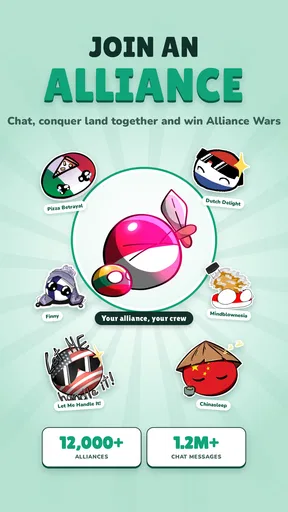
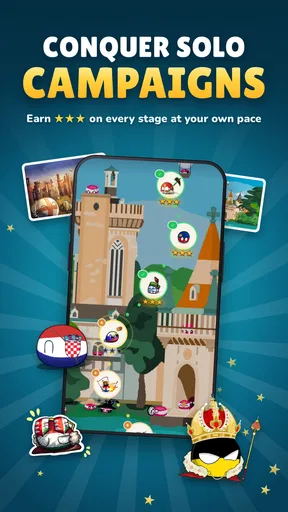
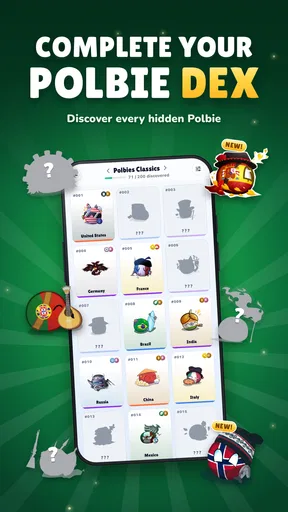
 Analysis by AppCompare
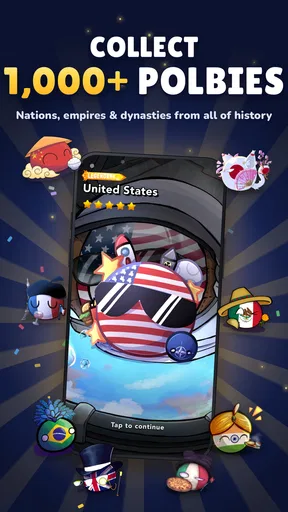
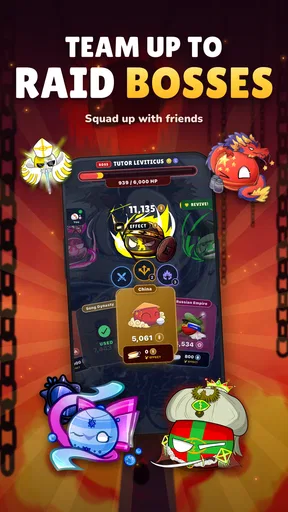
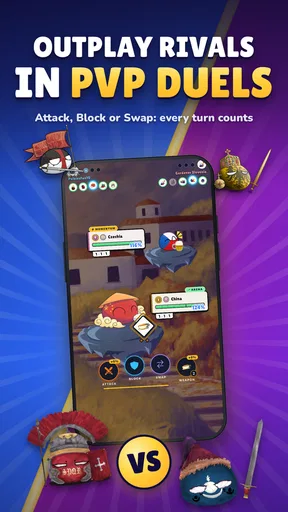
Polandball Go is the kind of adventure game that makes a strong first impression through personality rather than realism. Its central idea is easy to understand: you build an alliance, improve your nations, and explore a city while surrounded by the familiar visual language of Polandball-style characters. I found it approachable within minutes, but not so shallow that the opening concept explains everything worth discovering. The appeal comes from the way the game turns national caricature into a playful setting for progress, collection, and exploration.
Developed by Zone Gaming LLC, this free game is aimed at a broad audience and carries an Everyone content rating. It runs on Android 7.0 or later, which makes it accessible on many older devices as well as newer phones. The current version is 4.1.3, and the game has passed the early curiosity stage with more than fifty thousand installs. Its average rating is 4.8 from roughly three thousand ratings, while the review count sits at just over one hundred. Those figures suggest that the presentation and basic loop connect with players, although I would still judge it by how well its systems fit my own play style rather than by popularity alone.
A playful city that communicates before it explains
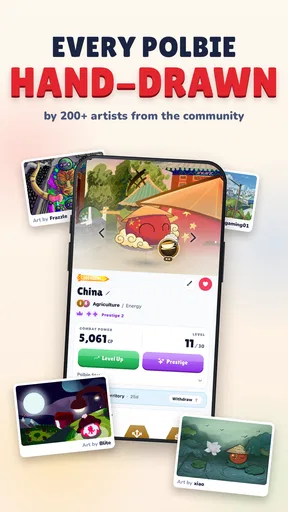
My first reaction was that the art direction does a lot of the teaching. The round characters, expressive faces, and deliberately exaggerated national identities make the game readable at a glance. I do not need a long explanation to understand that the people on screen are meant to be humorous representations rather than realistic citizens. That matters in an adventure game because visual clarity reduces the effort needed to learn the setting.
The city also gives the experience a useful sense of place. Instead of presenting a disconnected menu of upgrades, Polandball Go frames progress around a location that I can explore. The city becomes more than a backdrop: it is the surface where the alliance, nations, and improvement systems meet. Even when I am focused on the next task, the setting reminds me that the game is trying to create a small, shared world rather than a purely abstract progression screen.
What I like most is the contrast between the simple shapes and the strategic implication behind them. A cheerful ball character can represent a nation, but the player is still being asked to think about relationships, development, and movement through the city. That combination keeps the tone light without removing the feeling that my choices have a direction. It is not a serious geopolitical simulation, and it would be a mistake to approach it expecting one. Its strength is turning recognizable symbols into an accessible adventure framework.
Why the visual language works for new players
The characters are especially helpful when I return after a break. Their silhouettes and colors make the game easier to scan than a more detailed strategy interface. I can quickly distinguish the important elements of a scene and focus on what I want to do next instead of spending time interpreting dense menus. For younger players, or for anyone who prefers games that explain themselves visually, this is a real advantage.
There is also a social quality to the presentation. An alliance feels natural in a world populated by personified nations, even before the underlying mechanics become familiar. The art establishes the idea that progress is not only about making one isolated character stronger. It encourages me to think in terms of a group and a developing collection of identities.
Worth Reading Before You Choose

EA SPORTS FC Mobile 26 Is a Bigger Football Game, but It Takes Time

Flipboard Shows What News Apps Must Do Beyond the Feed

Switching to Android Auto Means Rethinking Your Driving Routine

Google Calendar Makes a Crowded Week Easier to Manage

Ludo King Makes the Most of the Minutes Between Plans

Baby Panda World Brings Quick Play to Modern Phones, but Its Game Library Feels Busy
The trade-off is that the same cartoon language may not satisfy players looking for a detailed, immersive world. The setting is intentionally broad and humorous, so it does not offer the environmental realism of a conventional city adventure. If I want realistic architecture, dramatic character animation, or a serious narrative tone, I would choose a different game. Polandball Go is more successful when I treat its city as a colorful playground with a clear visual joke at its core.
Reading the city as a progression map
One useful way to play is to stop viewing the city as something to pass through and start treating it as a map of priorities. When I see a new area or an opportunity to improve a nation, I ask whether it supports my next immediate goal or whether it is simply tempting because it is visible. That small distinction helps prevent aimless tapping and gives the exploration a more deliberate rhythm.
I also recommend checking the broader alliance before spending resources on a single improvement. The game’s concept naturally rewards a group-minded approach, and focusing too narrowly can make progress feel uneven. Even without turning every decision into a calculation, I get better results when I ask how an upgrade contributes to the whole collection rather than judging it only by its instant reward.
This is one of the less obvious strengths of the design: the playful characters invite casual interaction, while the city and alliance framing quietly encourage planning. The game does not need to become complicated to make me think ahead. It only needs to make the next choice feel connected to the larger world.
Sound, pacing, and the mood between decisions
The atmosphere depends on more than the artwork. The sound design and pacing work best when they give each action enough space to register without making the player wait unnecessarily. In my sessions, the game feels suited to short visits because its cheerful presentation makes it easy to pick up, perform a few actions, and leave without feeling that I have abandoned a long cinematic sequence.
That pacing is important for this kind of adventure. A game built around exploration and upgrades can become tiring if every step is slowed by excessive menus or repeated interruptions. Polandball Go benefits from keeping the mood light. The humorous setting makes ordinary progress feel like part of the game’s personality, while the steady movement between city exploration and improvement stops the experience from becoming a static management screen.
I would not describe the mood as intense or dramatic. There is no reason to expect the pressure of a competitive action game or the emotional weight of a story-driven adventure. Instead, the sound and rhythm support a relaxed loop. I can play while taking a short break, and the game’s identity remains intact even when I am not giving it my full attention.
That convenience comes with a limitation. Players who need a strong soundtrack, elaborate audio storytelling, or constant high-energy events may find the experience too gentle. Its rhythm is designed to support the world and the decisions, not to dominate them. For me, that is a good fit when I want a calm mobile game, but it also means the atmosphere depends heavily on whether I enjoy the Polandball humor in the first place.
How the systems fit the setting
The core mechanics make sense because they are tied to the game’s central fantasy. Building an alliance gives the cast a reason to exist together. Upgrading nations gives the player a clear form of progress. Exploring the city provides movement and context. These elements could have felt like separate activities, but the shared visual theme helps them belong to the same world.
I especially appreciate that the game does not ask me to choose between exploration and development as completely separate identities. The city gives exploration a destination, while the nations give improvement a personal face. That connection makes each part feel more meaningful than a generic upgrade button or a map filled only with collectibles.
For a new player, I would begin by learning the relationship between these three activities rather than rushing toward the most attractive reward. Explore enough to understand how the city is organized, then return to the alliance and upgrades with a clearer idea of what the game is asking. This approach avoids a common mobile-game problem in which the player follows prompts without understanding the purpose behind them.
Another practical tip is to treat upgrades as a pacing tool. If I spend everything immediately, I may gain a quick sense of progress but lose flexibility when a more useful opportunity appears. Saving some resources for the next meaningful step makes the city feel less like a sequence of isolated clicks. I do not need to optimize every move, but keeping a small reserve gives my decisions more weight.
Free access and the cost of convenience
The game is free to download and play, which makes it easy to test without committing money at the start. Optional purchases range from $0.99 to $29.99 per item. That range is worth considering before getting deeply invested, especially if I am the kind of player who dislikes seeing paid shortcuts in a progression game.
My advice is to decide early what kind of player I want to be. If I am happy exploring at the game’s natural pace, the free entry point is attractive. If I feel pressure to accelerate every upgrade or unlock every advantage, the larger purchase options can change the experience from a relaxed adventure into a spending decision. The important trade-off is not simply the price of an individual item; it is whether paying would improve my enjoyment or only remove a little waiting.
Parents may also appreciate that the content rating is Everyone, but I would still explain the purchase model before handing the game to a child. A friendly visual style does not automatically make every payment decision obvious. Setting expectations around optional purchases is a sensible part of making the game fit a family device.
Who will enjoy it, and who should skip it
I would recommend Polandball Go to players who enjoy humorous character design, light exploration, and progression that can be handled in short sessions. It is particularly suitable for someone who likes the idea of collecting or improving a group of themed characters but does not want a grim world or a complicated interface. The national caricature angle gives it a distinct identity that ordinary city-building or adventure games do not have.
It can also work as a casual shared game. One person might enjoy recognizing the characters and visual jokes, while another focuses on the order of upgrades and the best way to develop the alliance. That makes it more conversational than many solitary mobile games. I can imagine showing a new character to a friend, discussing which nation to improve next, and then returning later to see how the city has changed.
I would skip it if I want a traditional story with carefully developed heroes, realistic world-building, or demanding action controls. I would also look elsewhere if my main goal is a deep strategy simulation in which diplomacy, economics, and territory are modeled with precision. The game borrows the language of nations, but its purpose is playful adventure, not serious political analysis.
How it compares with familiar alternatives
Compared with a standard city-building game, this one feels more character-led and less architectural. The focus is not simply on placing structures and watching numbers rise; the nations and alliance give progress a recognizable cast. Compared with a conventional adventure game, it is lighter on dramatic storytelling and more interested in the repeated satisfaction of exploring and improving.
It also occupies a different space from a competitive strategy game. I do not approach it primarily to outmaneuver another player or prove that I can manage a complex economy. Its pleasure comes from the combination of a humorous setting and manageable decisions. That makes it easier to recommend for casual play, but it may feel limited to anyone who wants a constantly escalating challenge.
The best alternative depends on what I value most. If I want atmosphere and personality without a heavy commitment, this game has a clear advantage. If I want deeper systems, a stronger narrative, or more demanding competition, another adventure or strategy title would likely serve me better. Polandball Go succeeds by choosing a specific tone and staying close to it.
What I would do during an ordinary play session
On a typical short session, I would begin by checking the alliance rather than immediately tapping through the most obvious city activity. I would look for the nation that benefits most from my current resources, make one considered improvement, and then explore to see whether that change opens a more useful route or objective. This keeps the session connected from start to finish.
If I only have a few minutes, I would focus on one clear task instead of trying to complete everything visible. The game is more enjoyable when I leave with a sense of direction, such as strengthening one part of the alliance or learning one section of the city. That habit also reduces the feeling that mobile progression games sometimes create, where the player performs many actions but remembers none of them.
For a longer session, I would alternate between exploration and upgrades rather than repeating one activity. The visual theme is strongest when I move through the city, notice the characters, and then use the resulting progress to shape the alliance. That alternation is the game’s natural rhythm, and forcing only one side of it makes the experience flatter.
My atmosphere verdict
Polandball Go works because its art, setting, sound, and pacing point in the same direction. The round national characters establish a playful mood, the city gives that humor somewhere to live, and the alliance and upgrade systems turn the visual concept into a playable routine. Nothing about it suggests that it wants to be solemn or realistic, and I think the game is better for making that choice clearly.
There are limits. The gentle rhythm may not hold the attention of players who need constant action, and the simplified world will not replace a detailed adventure narrative. The in-app purchase range also means I would approach the progression with a personal spending boundary. Still, those concerns do not undermine the central design; they simply define the audience more precisely.
My overall recommendation is simple: choose it if you want a friendly, characterful adventure built around exploring a city and developing an alliance, not if you are searching for a serious nation simulator. As a free game from Zone Gaming LLC, Polandball Go offers a distinctive mood and an easy entry point. I found its strongest quality in the way every major element supports the same playful idea, making the experience feel coherent even when the individual actions are small.
Pros
- Fun Polandball-themed take on location-based collecting
- Simple controls make it easy for casual players to start
- Exploring neighborhoods adds variety to regular gameplay
- Lighthearted humor gives the game a distinctive personality
- Short play sessions fit well into daily routines
Cons
- The player base may be small
- limiting interaction and competition
- Progress can feel repetitive after extended play sessions
- Location-based features may use significant battery power
- Some areas may offer fewer gameplay opportunities than cities
- Updates and long-term support may be inconsistent
FAQs for Polandball Go
What is Polandball Go, and how does the game work?
Polandball Go is a casual mobile game inspired by the recognizable Polandball internet characters. It generally combines simple tap-based or arcade gameplay with collecting, movement, challenges, and humorous visual references. Before downloading, players should check the current store description because features, objectives, and available game modes may vary between versions and updates.
Is Polandball Go free to download and play?
Polandball Go may be available as a free download, but players should review the Google Play Store or App Store listing before installing it. Free games can include advertisements, optional in-app purchases, or paid items that improve progression or unlock content. Checking the payment section and parental controls is recommended, especially if children will be playing.
Does Polandball Go require an internet connection?
The connection requirements can depend on the version installed and the feature being used. Basic gameplay may work offline, while advertisements, updates, leaderboards, cloud saving, or other online services may require internet access. If you plan to play while traveling or with limited data, test the game after installation and review its latest permissions and store information.
Is Polandball Go suitable for children?
Polandball Go uses cartoon-style characters and may appear appropriate for younger players, but suitability depends on its current content, advertising, purchases, and privacy practices. Parents should check the official age rating, read the store disclosures, and consider disabling in-app purchases. Humor, online features, or third-party advertisements may also affect whether it is suitable for a particular child.
What devices are compatible with Polandball Go?
Compatibility depends on the edition of Polandball Go and the operating system used. Before downloading, confirm the minimum Android or iOS version, required storage space, and whether the game is optimized for your phone or tablet. Older devices may experience slower loading, reduced performance, or crashes, particularly after major updates or when several applications are running.


